

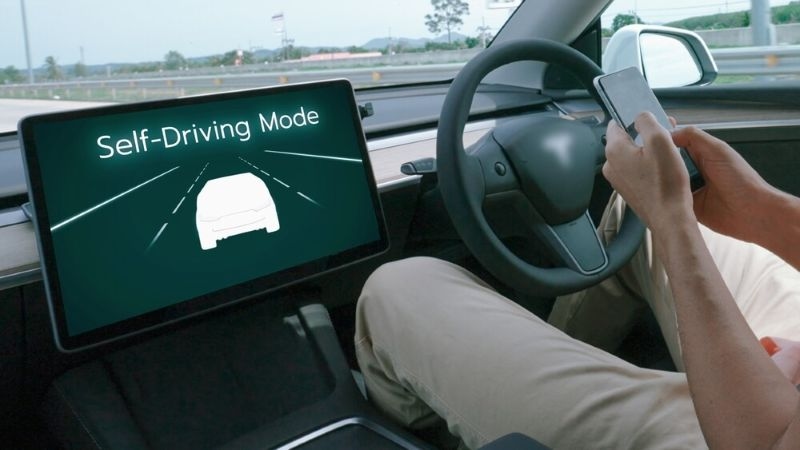
The conversation around self driving cars in 2026 sounds exciting, but it needs one honest starting point: most cars sold to everyday buyers still do not drive themselves everywhere. Some can help with steering, braking, lane changes, traffic, and parking. A few can take over under very narrow conditions. Robo taxis can operate without a driver in selected cities. But the family SUV sitting in a driveway? In most cases, it still needs a human who is awake, watching, and ready.
That is why the word “best” needs a bit of care. The best self-driving option may not be the flashiest badge. It may be the one that is actually allowed on the road, backed by testing, clear about its limits, and not oversold to drivers who simply want an easier commute.
In the United States, the law is not one neat national rulebook. Federal safety agencies look at vehicle safety standards, crash reporting, and investigations, while states control many road-use and deployment rules. NHTSA also notes that the term “self-driving” can confuse people because it may describe an operating state, not the full capability of the vehicle.
That matters because autonomous car regulations in the USA change by state, city, vehicle type, and use case. California, Nevada, Arizona, Texas, Florida, and a few other markets have become active testing or deployment areas, but approval in one place does not mean the same car can operate the same way everywhere. NCSL tracks autonomous vehicle legislation across all 50 states and Washington, D.C., which shows how fragmented the legal picture still is.
For drivers, the practical rule is simple:
The clearest Waymo autonomous vehicle update is that Waymo is no longer just a test project people hear about in tech headlines. Waymo says it is serving riders in cities including Phoenix, San Francisco Bay Area, Los Angeles, Miami, Orlando, Austin, Atlanta, Dallas, Houston, San Antonio, and Nashville, with some rides available through Uber in selected cities.
This is why Waymo feels like the most “real” self-driving experience for ordinary people. A rider can sit in the back, pick a destination, and travel without anyone in the driver’s seat in supported areas. That is different from buying a car with driver-assistance software.
Still, it is not magic. Service areas are mapped. Weather matters. Construction matters. Emergency scenes matter. California’s 2026 rule changes, for example, are adding more accountability for autonomous vehicle companies when driverless cars break traffic rules or block emergency responses.
The Tesla Full Self-Driving latest picture is more complicated. Tesla’s system is impressive in the way it handles city streets, turns, traffic lights, and lane decisions, but Tesla still describes consumer FSD as “Full Self-Driving (Supervised).” Tesla’s own manual says drivers must pay attention to the road and be ready to take over at all times.
That one word, supervised, changes everything. A Tesla with FSD may feel more capable than many competing driver-assistance systems, but it is not the same thing as a private Waymo. The human behind the wheel remains responsible.
So, should shoppers consider Tesla? Yes, if they understand what they are buying. It is one of the most advanced consumer systems available, but it should not be treated like a nap pod, mobile office, or chauffeur. The car may do a lot. The driver still has a job.
This is where level 3 automation vehicles enter the picture. Level 3 means the vehicle can handle the driving task under specific conditions, and the driver does not have to constantly monitor the road during that approved operation. However, the driver must be ready to take back control when the system asks.
Mercedes-Benz DRIVE PILOT remains one of the most important examples. Mercedes says DRIVE PILOT is an SAE Level 3 conditionally automated driving system, and its U.S. certification has covered California and Nevada for specific S-Class and EQS Sedan models.
That sounds like a big jump, and it is. But the limits are strict. It is not a “go anywhere, do anything” feature. It works in certain traffic, road, speed, weather, and mapped conditions. In other words, Level 3 is not full freedom. It is a legal, carefully boxed version of automation.
For anyone comparing self driving cars in 2026, the field can be understood in three buckets.
Waymo is the strongest pick for someone who wants to experience a driverless ride today. It is a service, not a personal car purchase, but it offers the cleanest version of “no driver in front” in approved cities.
Tesla remains the most talked-about option for buyers who want advanced help in their own vehicle. The second Tesla Full Self-Driving latest takeaway is that the branding still needs caution. It can assist, but it does not make the car fully autonomous for private owners.
Mercedes-Benz is the cleaner answer for shoppers asking what is legally different from ordinary driver assistance. Among level 3 automation vehicles, DRIVE PILOT shows where the market is heading, even if availability is still limited and expensive.
On a Similar Note: Unveiling the 2025 Tesla Model 3 Refresh: All Key Details
A self-driving system is not safe just because it has cameras, radar, lidar, or a powerful computer. Safety comes from how the system behaves when things get messy. A plastic bag blows across the road. A cyclist swerves. A school bus stops. Rainwater hides lane markings. A police officer waves traffic around a crash.
That is where the second Waymo autonomous vehicle update becomes important: expansion is happening, but cities are also demanding better coordination, reporting, and emergency response behavior. California’s newer autonomous vehicle rules, set for July 1, 2026, include stronger reporting and law-enforcement response tools.
Buyers should ask sharper questions:
Those questions matter more than a glossy demo video.
The best advice is not “buy the most futuristic car.” It is “buy the system whose limits are clear.”
A buyer should check:
The hype around self driving cars in 2026 is real, but so is the gap between assisted driving and true autonomy. The winners will be companies that make that gap smaller without pretending it has already disappeared.
Check Out: Tesla Model Y 2025 Review: Still the EV Crossover to Beat?
The best self-driving car in 2026 depends on what someone actually means by self-driving. For a driverless ride, Waymo is the most visible real-world option in supported cities. For a personally owned car with advanced assistance, Tesla stays near the top, but it still demands supervision. For legally recognized conditional automation, Mercedes-Benz DRIVE PILOT gives the clearest Level 3 example.
The street-level truth is simple: self-driving is here, but not everywhere, not in every weather condition, and not in every driveway. The smart buyer will ignore the loudest claim and look for the safest, clearest, most legally supported system available where they live.
In some places, yes, the rules are moving in that direction. California’s newer framework allows law enforcement to issue notices to autonomous vehicle companies when driverless vehicles violate traffic rules or interfere with emergency operations. That does not work like a normal human-driver ticket, but it does create a formal path for accountability when no person is sitting behind the wheel.
Insurance can vary widely because automated features change both risk and repair cost. Advanced sensors, cameras, lidar units, and calibration work can make repairs more expensive after even a small collision. At the same time, some safety features may reduce certain crash risks. Owners should check with insurers before paying extra for advanced automation because the monthly premium may not match the marketing promise.
They can help in some situations, especially with lane support, adaptive cruise control, parking assistance, and collision warnings. Still, older drivers should not rely on any system they do not fully understand. The best choice is a vehicle with clear alerts, simple controls, strong driver monitoring, and training at delivery. Comfort with the feature matters as much as the feature itself.
This content was created by AI